
Six exercises for skiing will get your legs ready: the wall sit, the squat progressing to a split squat, the eccentric step-down, the lateral skater step, the hip hinge or Romanian deadlift, and a loaded carry. Give yourself six to ten weeks. Red Lodge Mountain typically opens the day after Thanksgiving and runs through the second Sunday in April, so an October start means your first run of the season is not also your first hard leg day of the season.
Below is the week-by-week plan, each exercise with an easier and a harder version, and what the research shows about skiing into your 50s, 60s, and beyond.
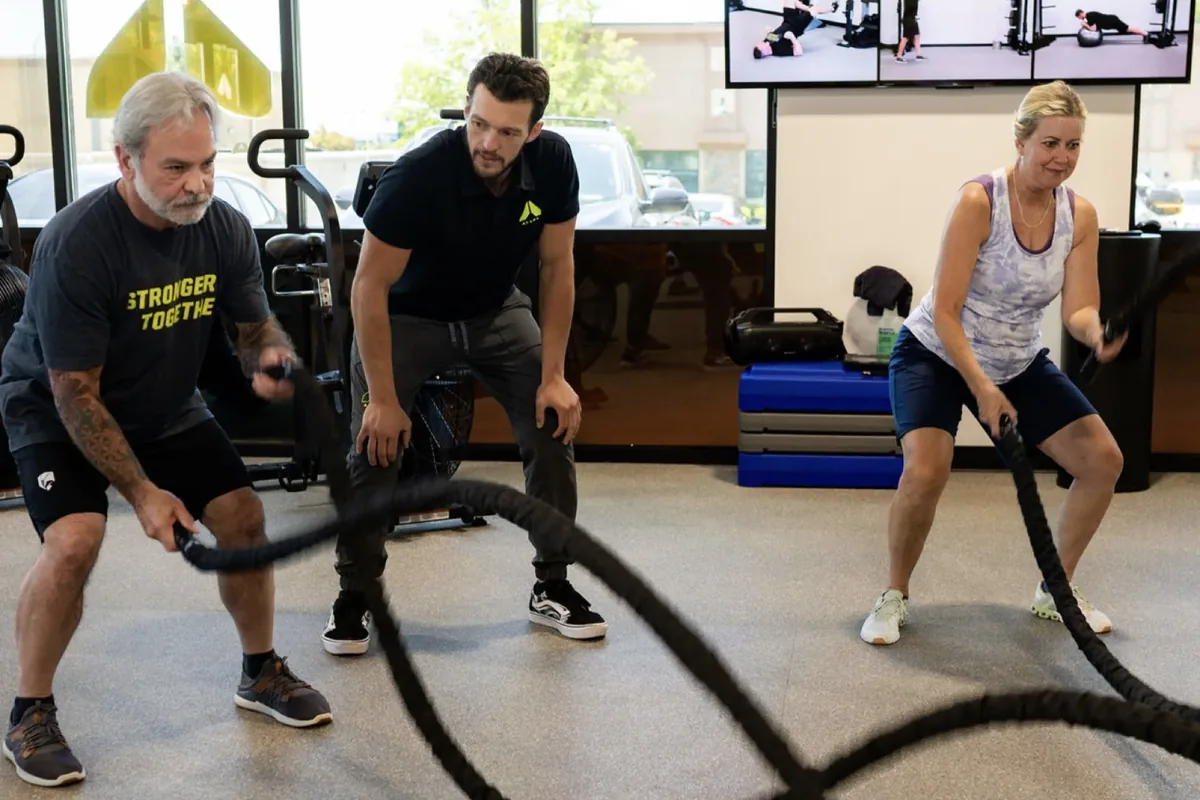
- Six moves cover the job: wall sit, squat to split squat, eccentric step-down, lateral skater step, hip hinge or RDL, and a loaded carry.
- Start six to ten weeks out. Red Lodge Mountain typically opens the day after Thanksgiving, which puts a good build in early to mid October.
- Skiing fatigues legs through lengthening (eccentric) work. In one study of recreational skiers averaging 49 years old, eccentric hamstring strength was still down about 11% a day after a four-hour ski session.
- Lowering slowly matters more than lifting heavy. A three to five second descent on a step-down trains what a turn actually demands.
- Every move here has a shallower and a steeper version, because the right version is the one your knees can do well today.
Why skiing beats up your legs even when you are fit
Skiing loads your legs eccentrically, meaning the muscle lengthens while it resists, and that work fatigues differently than most gym training or a summer of hiking. A 2015 study of 24 recreational skiers with a mean age of 49 measured strength around a single four-hour ski session. Eccentric hamstring peak torque dropped about 5% an hour afterward and about 11% at 24 hours, and eccentric quadriceps torque fell roughly 6 to 7%. The deficits were still there a day later. The authors flagged prolonged eccentric fatigue as a potential injury risk factor and supported eccentric training as preparation.
Control fades before strength does. Research tracking skiers across about three hours and 24 runs found quadriceps EMG frequency shifted lower in seven of eight measures, with activation peaks arriving later in the turn and more load pushed onto the outside leg. Nobody in that study was exhausted. The quality of the movement simply eroded.
Lunch does not reset it. A 2023 study of 38 female recreational skiers over 40, mean age 53, found EMG median frequency fell 9 to 15% from the first reference run to the third across all thigh muscle groups, and a 45-minute break produced no measurable recovery.
Why October beats the week before opening day
The first day of the season is the riskiest one, and a week of cramming beforehand does not change that. A case-control study across three Scottish ski areas found skiers and snowboarders on their first day were overrepresented among the injured by a factor of 2.2.
Preparation is a common gap. A 2025 trauma-center review of 579 ski and snowboard patients, mean age 47.3, attributed 69.1% of injuries to patient error and 5.7% to fatigue. Patients with fractures were significantly older than those without, 50.7 versus 45.4 years, and the authors noted that general physical preparation among recreational skiers is often lacking.
What training does to those numbers is still an open question for recreational skiers, but the direction is encouraging. A 2025 meta-analysis of 19 randomized trials covering 28,176 subjects found training interventions were associated with a 25% lower knee injury risk in athlete populations. Those were athletes, not recreational skiers over 50, so read it as a reason to train rather than a promise. The same analysis found the best results came from short sessions of 5 to 15 minutes, four to five times a week, in programs running longer than 26 weeks. Short and frequent beats long and rare.
So count backward. Opening day is typically the Friday after Thanksgiving, which puts six to ten weeks of preparation in early to mid October. If you already train year-round, this is a shift in emphasis rather than a restart, which is the argument in our piece on training for Montana's seasons.
Your six to ten week ski season workout plan
Two to three sessions a week, plus a few minutes of balance work on the off days.
| Phase | Weeks | Focus | Frequency | The work |
|---|---|---|---|---|
| 1. Base and patterning | 1 to 3 | Tolerance and technique before load | 2x per week | Tempo squats (3 seconds down), wall sit building from 20 to 60 seconds, hip hinge patterning, low step-ups |
| 2. Strength and single leg | 4 to 7 | Each leg carries its own load | 2 to 3x per week | Split squats, eccentric step-downs with a 3 to 5 second lower, single-leg RDL, loaded carries |
| 3. Endurance and lateral power | 8 to 10 | Hold position late in the run | 2 to 3x per week, plus daily balance | Longer wall-sit intervals (3 x 45 to 60 seconds), skater steps progressing to low hops only if joints tolerate them, carries |
Phase one is not filler. It is where joints and tendons get used to the volume so phase two has somewhere to go. If you are unsure what weight belongs on the dumbbells, our guide to how heavy to lift after 50 covers that judgment call.
The six exercises for skiing, with a version for every knee
Pick the version you can do with clean form for every prescribed rep, not the one that sounds impressive. Choosing that version week to week is the part a printed list cannot do for you, and it is why our coaches assign the variation rather than the exercise.
1. Wall sit
A turn is largely an isometric hold: your quads brace at a fixed angle while the ski does the moving.
- Base: Back flat on the wall, feet hip-width, thighs at or near 45 degrees. Build from 20 to 60 seconds across three holds.
- Easier: Shallower knee angle, or hover just above a chair-height box for 10 to 15 seconds.
- Harder: Hold a plate on your lap, or shift to a single-leg wall sit for 10 to 20 seconds per side.
2. Squat to split squat
The squat builds the base. The split squat teaches one leg to carry the load, which is what every turn asks for.
- Base: Goblet squat, 3 sets of 8 with a 3 second lower, then progress to a split squat, 3 sets of 6 to 8 per leg.
- Easier: Squat to a bench and stand back up. Keep a hand on a wall in the split stance.
- Harder: Rear-foot-elevated split squat, or add dumbbells once the bodyweight version is smooth.
3. Eccentric step-down
The lowering phase is the closest gym match to absorbing a turn or a bump, and it trains the quality that faded most in the fatigue research above.
- Base: Stand on a 6 to 8 inch step. Lower the opposite heel toward the floor over 3 to 5 seconds, then drive back up. 3 sets of 6 per side.
- Easier: A 2 to 4 inch step, a hand on a rail, and a 2 second lower.
- Harder: A 10 to 12 inch step with a 5 second lower, or hold a light dumbbell.
4. Lateral skater step
Skiing happens side to side. Most training happens front to back. This closes the gap.
- Base: Step wide to one side, sink into a quarter squat, hold a beat, push back. 3 sets of 8 per side.
- Easier: Smaller step, no hold, one hand on a wall.
- Harder: A low skater hop with a stuck landing, added only if knees and ankles tolerate it. Landing quietly matters more than jumping far.
5. Hip hinge and Romanian deadlift
Glutes and hamstrings hold an athletic stance instead of letting you sit back into the boots, and hamstrings showed the deepest eccentric fatigue in that four-hour ski study.
- Base: Dumbbell RDL, 3 sets of 8. Soft knees, ribs down, lower until the hamstrings stretch.
- Easier: Bodyweight hinge with a dowel held along your spine to keep the back neutral.
- Harder: Single-leg RDL, 3 sets of 6 per side, or add load.
6. Loaded carry
The trunk keeps the legs honest. Carries build the bracing that holds your position when the terrain changes under you.
- Base: Suitcase carry with one dumbbell, 3 rounds of 30 to 40 seconds per side.
- Easier: Two lighter dumbbells, 20 seconds per round.
- Harder: Front-racked carry, or a longer suitcase carry. Swap in a plank if grip or shoulder discomfort is the limiter.
Balance and single-leg control, the part most plans skip
Balance work belongs in a ski plan because control degrades before strength does. A systematic review of 20 randomized trials found balance training effective for improving postural sway and functional balance. Paired with the timing decay above, a few minutes a day is efficient.
Keep it simple. Single-leg stance for 30 seconds per side while the coffee brews, then eyes closed, then on a folded towel. Tandem stance while you brush your teeth. None of it looks impressive and all of it is specific to a ski day.
Skiing in your 50s, 60s, and beyond
Skiing is trainable at these ages, and the research is more positive than most people expect. A 2021 study of a 12-week guided recreational skiing program in adults in their 60s and 70s, averaging about 28.5 ski days, found improved maximal exercise capacity compared with controls, including higher VO2max (33.8 versus 28.7 mL/min/kg, p = 0.030).
The practical read: the goal is not to ski the way you did at 30. It is to arrive with enough strength and control to ski the way you want to now, and to walk normally on Sunday. If you are building that base from scratch, strength training over 50 in Billings covers the foundation this seasonal plan sits on.
From Billings to the chairlift
Red Lodge Mountain is about an hour from Billings: I-90 west to Exit 434 at Laurel, then Highway 212 southwest roughly 46 miles, with the mountain six miles past town. It offers 2,400 feet of vertical, 70 runs across 1,635 acres, six chairlifts plus two surface lifts, and an average of 250 inches of snow, topping out at 9,416 feet on Grizzly Peak. The season typically opens the day after Thanksgiving.
Red Lodge is close enough to be a regular Saturday rather than an annual trip, and a body that handles regular Saturdays is a different project than one that survives a single week in March. Farther out, Showdown, Montana's oldest ski area, and Big Sky both sit around three hours away.
Frequently asked questions
How many weeks do I need to get ready for ski season?
Six to ten weeks at two to three days a week is the realistic window. Less than four weeks leaves little room to progress from patterning into real single-leg strength. Starting in November, run phases one and two and skip the lateral hops.
Can I get ski-ready if my knees already bother me?
Often yes, with the right versions of the right movements, but start by talking to your doctor or physical therapist about what your knees tolerate. The adjustments are usually smaller than people expect: a lower step, a shallower wall sit, a 2 second lower instead of 5, skater steps without the hop. The hiking strength guide uses similar progression logic for the same joints.
Are wall sits alone enough to prepare for skiing?
No. Wall sits build the isometric quad endurance that holds a turn, and they are a fine place to start, but they do not train the lowering strength that absorbs bumps, the single-leg control a turn demands, or the lateral work skiing is built on.
What if I have never lifted weights?
Start at the easier version of every movement and stay in phase one the full three weeks. Bodyweight squats to a bench, short wall sits, low step-ups, and a dowel hinge are a complete phase-one program. Load comes from performing the movement well, not from the calendar.
Get a plan that fits your knees, not a generic list
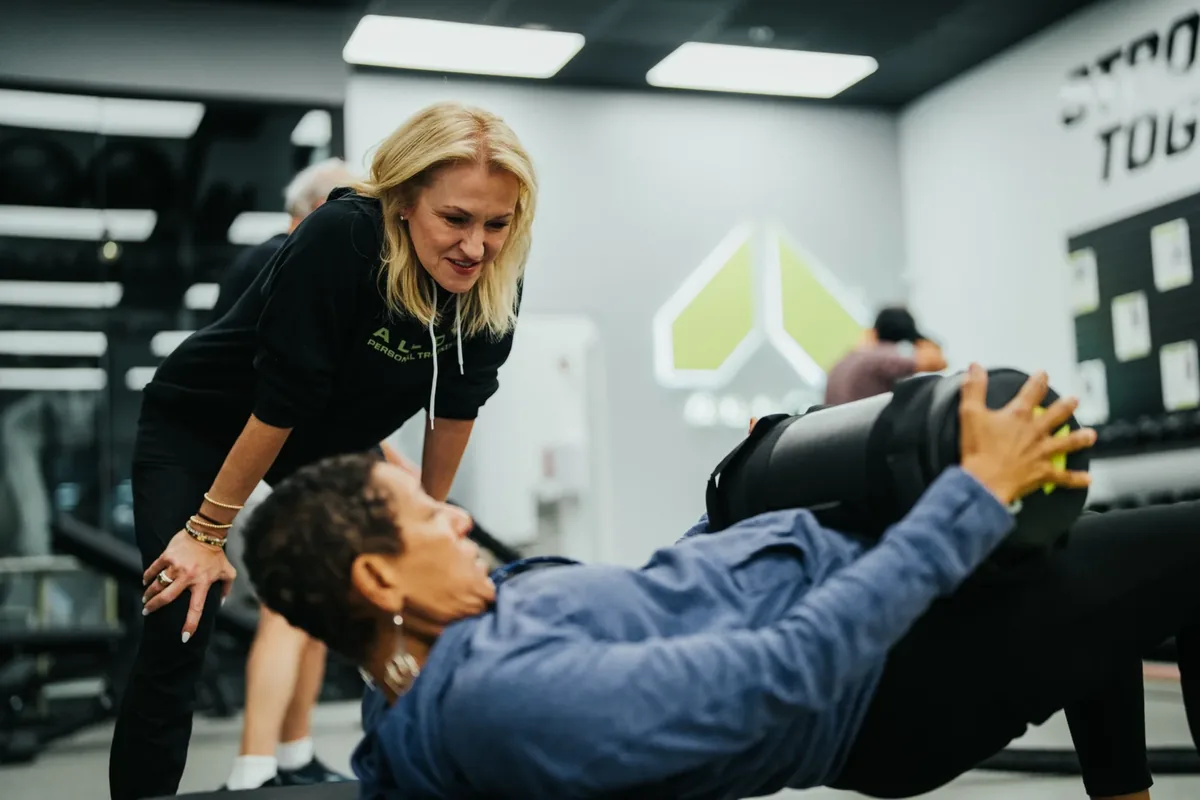
A list cannot see your knee, your hip, or how last season actually went. That call gets made in person. At Alloy Personal Training Billings, small group personal training caps sessions at six members so a coach can assign the right version of each exercise, adjust it week to week, and track whether the plan is working before opening day.
Your Fitness Consultation includes a conversation about your goals, lifestyle, and any physical considerations, an InBody body composition analysis, and a functional movement assessment, followed by personalized recommendations. Straightforward pricing at your consultation, no pressure and no games. Book Your Fitness Consultation and give yourself the full ten weeks.
This article is general educational information, not medical advice. Talk to your doctor before starting a new exercise program.