
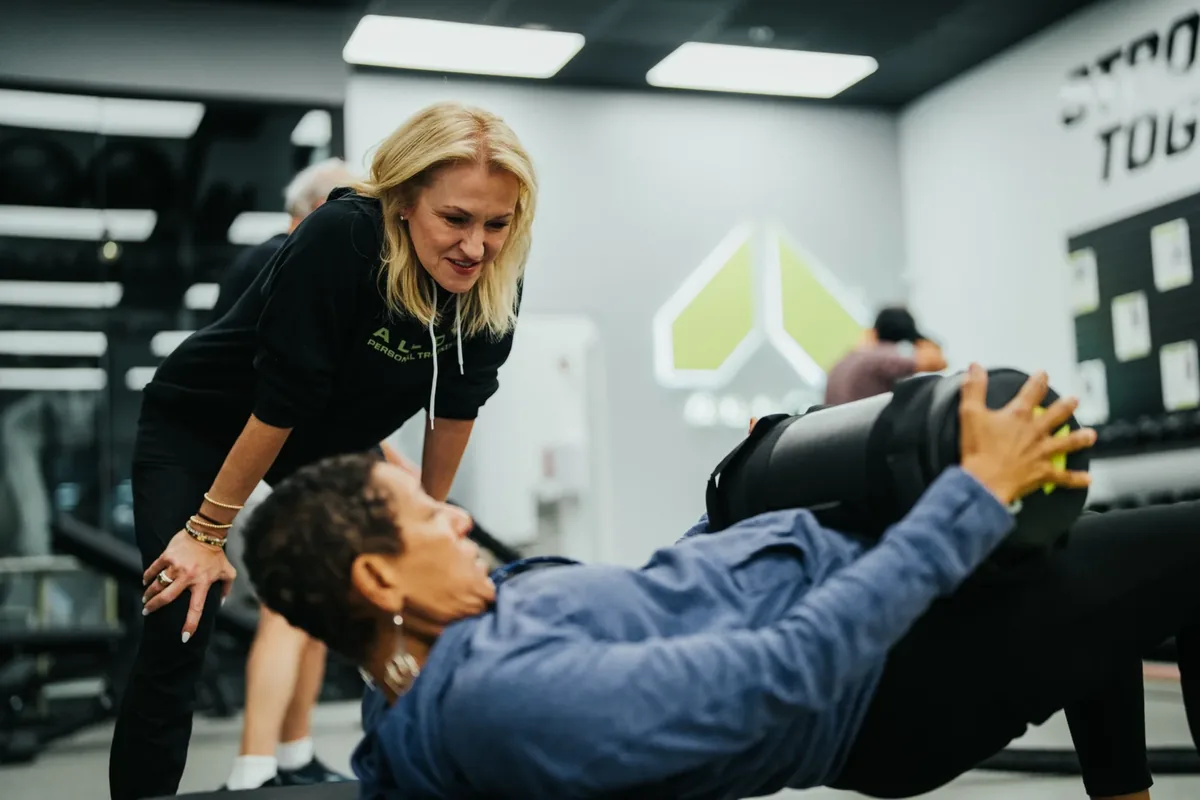
In Billings, plan on roughly $35 to $90 per hour for one-on-one personal training. That figure comes from marketplace guidance for the Billings area, which reflects general industry guidance rather than measured local quotes. Nationally the picture lines up closely: Thumbtack's personal trainer cost guide puts the average at $55 per hour with a typical range of $40 to $100, and Bark's 2026 guide reports $50 to $90 per session. Small-group training costs less per person, and industry guides typically place it at $20 to $60 per person per session.
Where you land inside those ranges comes down to a handful of variables, mostly how many people share the coach, how long the session runs, what credentials the coach holds, and whether you buy single sessions or a monthly membership.
- One-on-one personal training in the Billings area runs about $35–$90 per hour, per marketplace guidance for the area; the national average is $55 per hour.
- Small-group training typically costs $20–$60 per person per session according to industry-guide consensus, because the coach's hour is shared.
- Billings sits modestly below national price levels, with a regional price parity of 93.5 against a US level of 100.
- The metro has an unusually deep trainer market, a location quotient of 1.86, which gives buyers real room to compare.
- Training clients averaged 21 sessions a year in 2024, putting a realistic annual spend at roughly $735 to $1,890 at market rates.
What a personal trainer costs in Billings in 2026
Here is the whole market on one screen. Every figure below is a published range, not any one studio's pricing.
| Format | Typical price | Source and date |
|---|---|---|
| One-on-one, Billings area | $35–$90 per hour | Marketplace guidance for the Billings area, accessed 2026 |
| One-on-one, national average | $55 per hour (typical range $40–$100) | Thumbtack cost guide, 2025 |
| One-on-one, national per session | $50–$90 per session | Bark cost guide, January 2026 |
| Small group | $20–$60 per person per session | Industry-guide consensus, no government source |
Two notes on reading it. The Billings range is wide because it captures everything from a newly certified trainer at a big-box gym to a specialist with two decades behind them. And the small-group figure is a consensus across fitness industry guides rather than a government or survey statistic, so treat it as a ballpark.
Why Billings prices sit a little below big-city rates
Billings is a modestly cheaper place to buy almost anything, and training is no exception. The Bureau of Economic Analysis puts the Billings metro's regional price parity at 93.5 with the national level set at 100, meaning goods and services here run about 6.5% below the US average. Montana as a whole sits at 94.6. Both figures are 2024 data.
Local wages follow the same pattern. In the Billings metro area, the most recent published metro data from the Bureau of Labor Statistics (May 2023) counted 310 exercise trainers and group fitness instructors earning a mean wage of $21.83 per hour, or $45,400 a year. Nationally, the BLS Occupational Outlook Handbook reports a median of $47,160 a year, or $22.67 per hour, with employment projected to grow 7% from 2025 to 2035.
The number worth sitting with is the location quotient in that same data: 1.86. Billings employs nearly twice the national concentration of trainers relative to total jobs. For a buyer, that is good news. There are enough coaches here that you can afford to ask hard questions and walk away from a bad fit.
The five things that move the price
Credentials. Getting certified is not cheap. Major certifications run $939 to $1,750, according to a 2026 certification cost comparison covering ACSM, NASM, ISSA, ACE and CSCS. Renewals and continuing education add more every cycle, and rates reflect that investment.
Experience and specialization. A coach who has spent years working with adults in their fifties and sixties, or with people returning to training after a long layoff, generally charges more than someone in their first year.
Session length. A 30-minute session costs less than a 60-minute one. Comparing a half-hour rate against an hourly rate is the most common apples-to-oranges mistake people make while shopping.
Format. This is the biggest lever of all, and it gets its own section below.
Setting. In-home training carries travel time and a private studio carries rent, while a big-box gym spreads overhead across thousands of members.
One-on-one, small group, and online: what you get per dollar
The real variable is the ratio, meaning how many people share the coach's attention during your hour. Everything else about price follows from it.
One-on-one buys undivided attention at $35–$90 an hour locally. Small-group training splits the coach's hour across a handful of people, which is why per-person cost drops into the $20–$60 range that industry guides describe. The trade-off is only a bad one if the group gets big enough that the coach stops watching you.
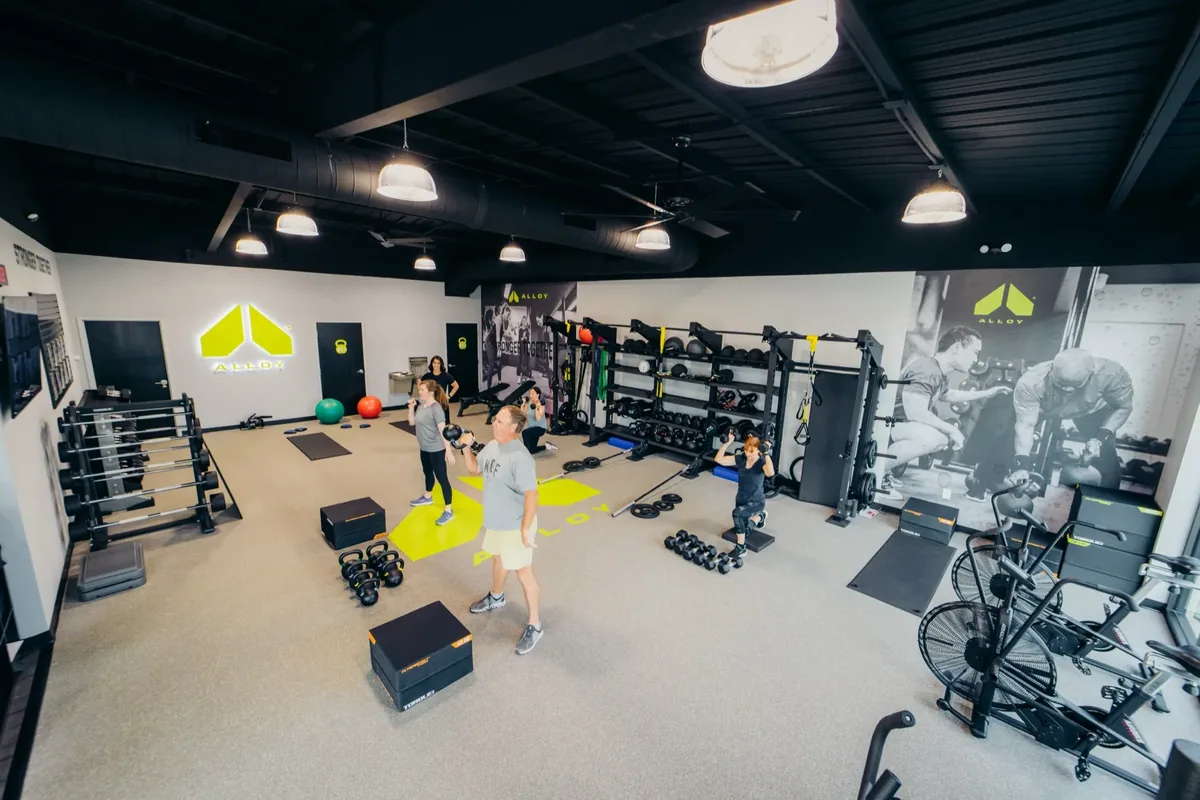
That distinction matters more than the price gap. A capped small group where the coach writes a separate program for each person and adjusts loads individually is a different product from a 25-person class doing the same circuit on the same count. We cap sessions at six at Alloy Personal Training Billings for exactly that reason, and it is worth reading the difference between six people and six identical workouts before comparing any two quotes. Our small group personal training page walks through how the format works session to session.
Consumers have been moving this direction on their own. The Health & Fitness Association's 2025 US consumer report, built on an 18,000-person survey, found that 23% of gym and studio members used a personal trainer in 2024 and 32% did small-group training, both historic highs, across a record 77 million members.
Online and app-based coaching is the cheapest tier. You get programming and check-ins without anyone in the room to correct a hinge pattern in real time. For someone who already trains confidently, that can be plenty. For someone coming back after a decade away, the missing set of eyes is the whole point of hiring a coach.
How pricing models work
Per session. You pay as you go. It is the highest per-session price and the lowest commitment, which makes it useful for testing a coach and expensive as a long-term plan.
Packages. You buy 10, 20 or 30 sessions up front at a discount. Read the expiration terms before you pay, because unused sessions that expire are the most common way people lose money on training.
Monthly membership. You pay a flat monthly rate for a set number of sessions per week. Studios built around this model usually bundle in what makes training work over time: written programming, a starting assessment, body composition tracking, and nutrition coaching. Divide a membership rate out per session before comparing it to a drop-in quote, and check what each one includes. A useful reference point is what a thorough starting assessment covers, since that piece is often missing from the cheapest quotes.
What a realistic year of training costs
Most people do not train three times a week for 52 weeks, and budgets should reflect reality. The same HFA report found personal training clients averaged 21 sessions in 2024, while women's participation in personal training rose 16% year over year to 7.3 million people.
At 21 sessions a year, market rates put the annual spend at roughly $735 at $35 a session, $1,155 at $55, and $1,890 at $90.
If you want to train more consistently than the average, here is the monthly math.
| Frequency | At $35/session | At $55/session | At $90/session |
|---|---|---|---|
| 1x per week (about 4/month) | $140 | $220 | $360 |
| 2x per week (about 8/month) | $280 | $440 | $720 |
| 3x per week (about 12/month) | $420 | $660 | $1,080 |
*Market ranges only, not any one studio's pricing. Figures use the national and Billings-area ranges cited above.*
Run the same math on a small-group rate and the picture changes considerably. Two sessions a week at $20–$60 per person lands between $160 and $480 a month, which is why the format has grown the way it has.
Questions to ask any Billings trainer before you buy
- What certification do you hold, and is it current? Ask for the issuing body by name.
- How many people will be in the room during my session? Ask for the cap, not the average.
- What happens in the first session? An assessment of some kind should come before a program.
- Is my program written for me, or is everyone doing the same workout today?
- What is the cancellation and expiration policy? Get it in writing before you buy a package.
- What is included beyond the sessions? Progress tracking, nutrition support and program updates vary widely between quotes at the same price.
Is a trainer worth it after 40?
It depends on what is currently stopping you, and cost is only one candidate. If you already train consistently and know how to progress a lift, a coach is a convenience. If you have been meaning to start for three years, or you stopped because something hurt and you were not sure what to change, the coaching is the product and the gym access is incidental.
The two things a coach reliably sells are accountability and supervised form. Showing up gets easier when somebody expects you, and loading a movement correctly gets easier when somebody is watching it. Those are also the hardest things to buy any other way, which may be part of why nearly a quarter of facility members now pay for training.
Adults over 50 often find the math tilts further toward coaching, because training priorities shift with age and a program written for a 25-year-old is rarely the right place to begin. Members here do not simply join a gym, they join a coaching relationship.
Frequently asked questions
How much does a personal trainer cost per month in Billings?
At the marketplace-guidance range for the Billings area ($35–$90 per hour-long session), once a week runs about $140 to $360 a month and twice a week runs about $280 to $720. Small-group formats at the $20–$60 industry-guide range land lower, roughly $160 to $480 a month for two sessions weekly. Memberships that bundle programming and assessments are usually quoted as one flat monthly rate instead.
Why do personal trainers cost as much as they do?
Certification alone runs $939 to $1,750 before renewals, and the posted hourly rate has to cover unpaid time: writing programs, tracking progress, and facility rent. The median fitness trainer earns $47,160 a year nationally, so the gap between what you pay per hour and what the coach takes home is wider than it looks.
Is small group training cheaper than one-on-one?
Yes. Industry guides place small group at $20–$60 per person per session against the $35–$90 per hour marketplace guidance for one-on-one in the Billings area, because the coach's hour is shared. The question to ask is where the group cap sits, since the savings only hold up if the coach can still see and correct every person in the room.
What if weekly training is not in the budget right now?
Lower the frequency before you lower the quality. One well-coached session a week plus two independent workouts often beats three unsupervised sessions, particularly early on when you are still learning the movements. If cost is not really the obstacle, it is worth naming the actual one, because the reasons people stay out of gyms are usually not financial.
Get straightforward numbers before you decide
Published ranges only take you so far. The next step is a real conversation about what you want to accomplish and what it takes to get there.
Our Fitness Consultation includes a conversation about your goals, lifestyle and any physical considerations, an InBody body composition analysis, and a functional movement assessment, followed by personalized recommendations. You get straightforward pricing at your consultation, no pressure and no games.
Book Your Fitness Consultation at Alloy Personal Training Billings, 4011 Montana Sapphire Drive, Suite 2, or call (406) 296-6667.
This article is general information for educational purposes and is not medical advice. Talk with your doctor before starting a new exercise program.