
Researchers at the University of Michigan once pooled the results of 49 separate resistance training studies on adults over 50. Combined, that covered more than 1,300 people. The average participant added about two and a half pounds of lean muscle in roughly five months of training.
Not maintained. Added. In people whose grandkids were in high school.
That finding deserves to be better known in a town where "I'm too old for that" gets said over coffee every morning. So let's walk through what the science actually supports, and what it looks like in practice on the West End.
Does muscle really still grow after 60?
It does, provided you give it a reason. The biology of muscle growth stays intact through your 60s, 70s, and beyond. What changes is the required dose of consistency. An older body responds to training a little more slowly and punishes randomness a little more firmly.
The word that matters is progressive. Muscle adapts when the demand creeps upward over time. The same three-pound dumbbells forever, the routine that never changes, produces the same body forever, minus the annual decline. A program that adds load gradually is the entire difference between exercising and rebuilding.
What's different about training in your 60s versus your 40s?
The recipe holds. The seasoning changes. You still squat, hinge, press, pull, and carry, because those movements are what living independently is made of. What shifts is everything around them: longer warm-ups, slower progression, two or three sessions a week instead of five. Exercise choices change too, to respect whatever your knees and shoulders have been through.
Recovery becomes a skill instead of an afterthought. Sleep, protein, and rest days pull real weight now. A good coach programs those in as deliberately as the lifting.
Is it risky to lift weights at this age?
Compare it to the alternative honestly. The choice isn't lifting versus safety. It's lifting versus a slow subtraction that ends with needing help off the toilet. Sarcopenia doesn't announce itself. It just keeps collecting.
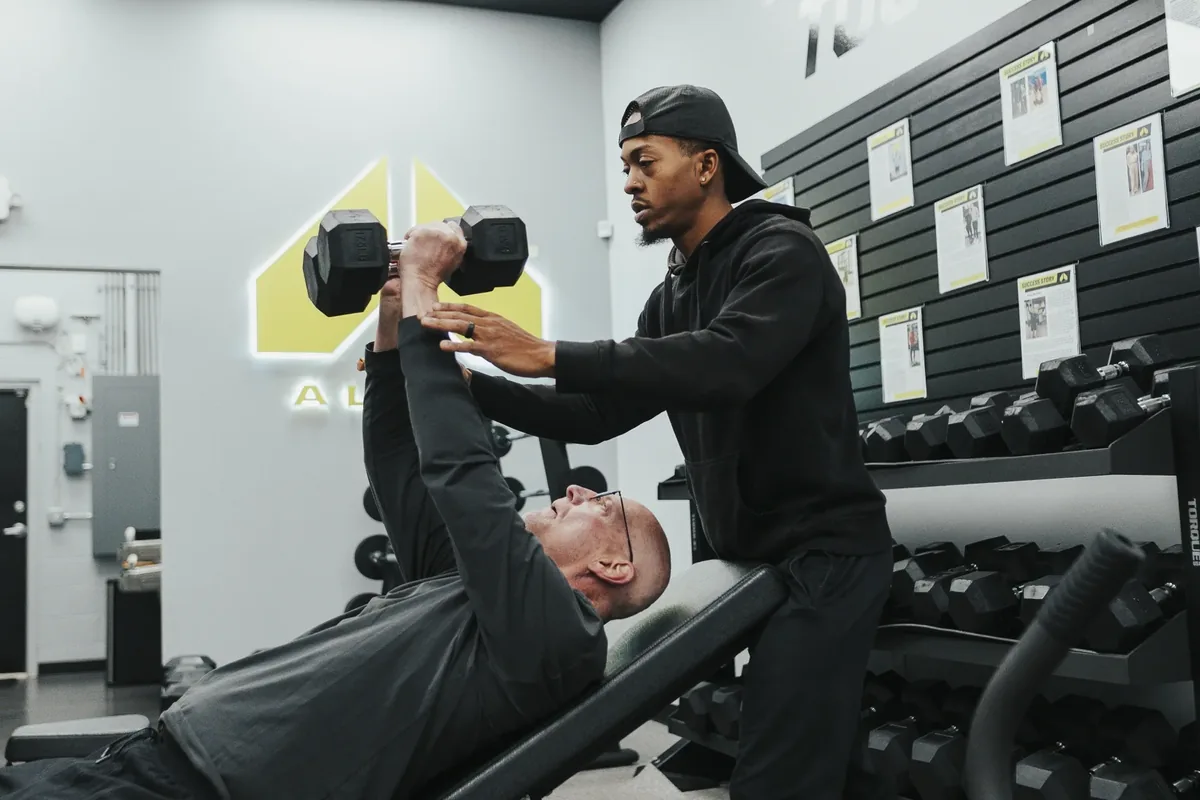
Supervised training flips the risk math. Loads start conservative. Form gets watched every session. Progressions are planned rather than improvised. In our experience, the dangerous gym activity for a 65-year-old isn't the coached deadlift. It's the unsupervised anything.
How does an over-60 beginner start in Billings?
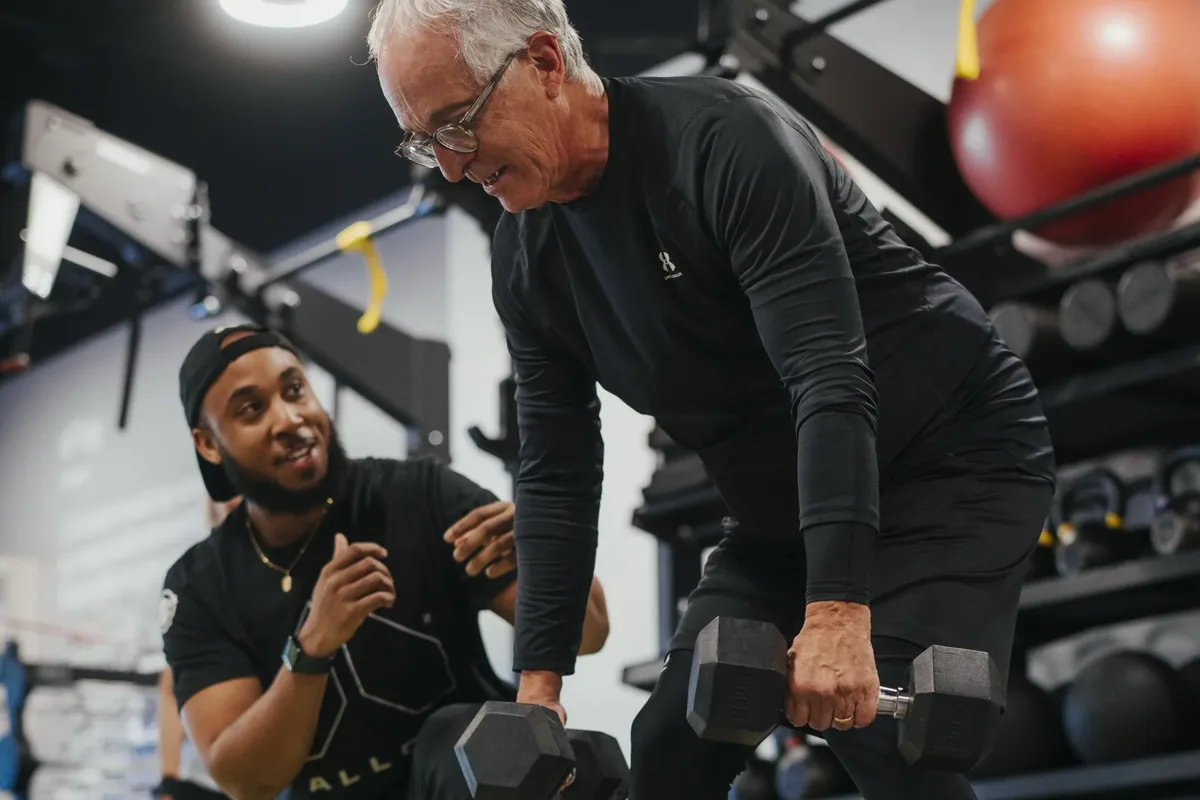
At Alloy, everyone starts the same way regardless of age: a Fitness Consultation. That's an InBody body composition scan, so we know your actual muscle and fat numbers. A functional movement assessment, so we know what your joints will tolerate. And a real conversation about goals, medications, surgeries, all of it.
From there you train in small groups capped at six, on a program written for you. The InBody scans repeat as you go, which matters enormously at this age. Watching a lean mass number climb at 66 turns "I guess it's helping" into "it's working, here's the printout."
Frequently asked questions
Should I clear this with my doctor? If you're managing heart disease, blood pressure, or a recent surgery, yes. Bring whatever guidance they give you. Programs bend around medical reality here every single day.
How long until something noticeable happens? Strength typically moves inside six weeks. Getting off the floor, hauling groceries, the stairs at Swords Park. Body composition changes show on the scan within a few months.
I've been sedentary for 20 years. Too far gone? The 49 studies included people exactly like you. Detrained muscle is remarkably eager. It remembers.
What if I can only manage twice a week? Twice a week is the researched minimum and it works. That's also the CDC's floor for adults, so you'd be doing it right, not doing it halfway.
Add, don't just preserve
Book a Fitness Consultation at Alloy Personal Training Billings, 4011 Montana Sapphire Drive, Suite 2, or call (406) 296-6667. The studies say your muscle is still listening. Give it something to hear.